

Architects, engineers and contractors in Singapore make most of their submissions electronically, but printed A1 and A0 drawings are still used every day for coordination meetings, trade briefings, tender meetings and site reference. When a revision is issued, the printed set has to follow it quickly, and a sheet printed at the wrong scale is worse than no sheet at all.
Whether physical drawings must be kept on site, and which ones, depends on the project: check what your project requires on site. This guide covers the printing side: the paper, how to export a CAD or BIM file so it prints at true scale, whether to roll or fold, and how the set reaches the office or site.
Which Paper Suits Printed A1 and A0 Drawings?
Working drawings are usually printed on plain uncoated paper, which keeps fine lines sharp and folds without cracking. Heavier paper suits colour presentation drawings with large filled areas. Synthetic stock suits drawings that will meet rain or site dust. Ask which papers are available for plans when you send the brief, and say how the drawings will be used.
- Plain uncoated paper. The usual choice for working sets, tender sets and day-to-day coordination. It takes pen mark-ups and folds neatly.
- Heavier paper. Suits colour renders, landscape plans and presentation sheets with large areas of solid colour, which can ripple on thin paper.
- Synthetic stock. Resists water and tearing, and suits drawings used outdoors or on a busy site.
| Use | Typical paper | Why |
|---|---|---|
| Working and tender sets | Plain uncoated paper | Sharp lines, folds neatly, writable |
| Presentation drawings | Heavier paper | Takes solid colour without rippling |
| Site reference | Synthetic stock | Resists water and tearing |
The posters page lists the A1 and A0 sizes and stocks that are quoted. For drawings mounted on board for display, see the rigid board sign mounting guide.
How Should CAD and BIM Drawings Be Exported for Printing?
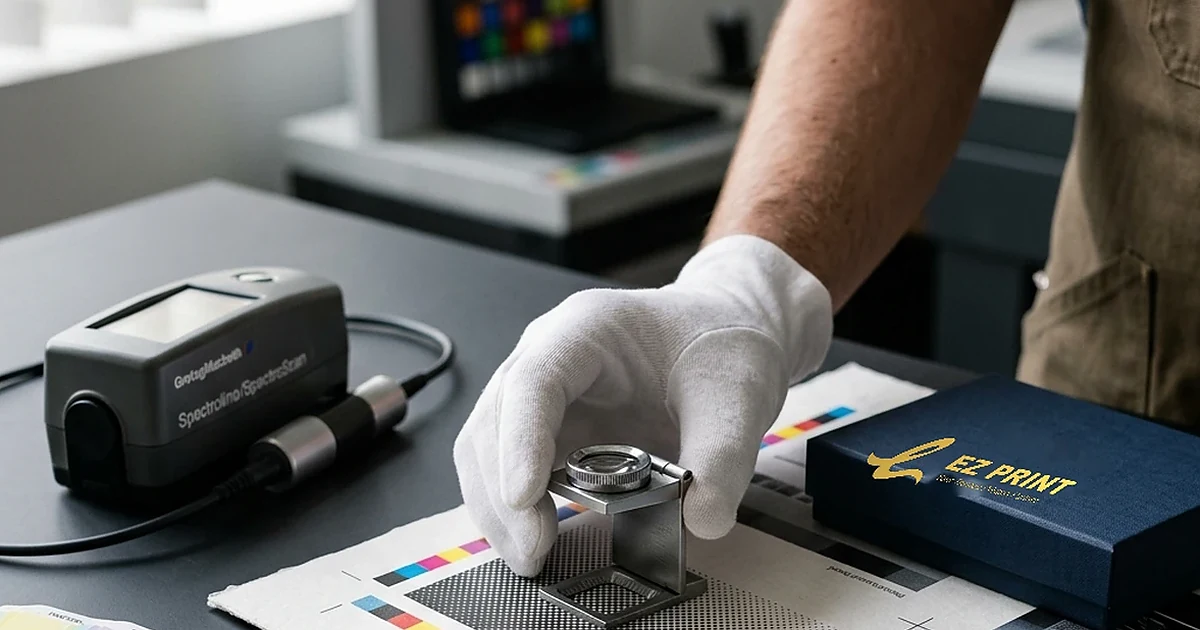
Export drawings as vector PDFs directly from your CAD or BIM software, at the true sheet size, with your plot style or line-weight settings applied. Do not use "fit to page", which changes the scale. Do not convert drawings to JPEG or PNG, which blurs fine lines and small text when printed at A1 or A0.
- Vector PDF. Use your software’s PDF output for print. Vector lines stay sharp at any size, so grids, dimensions and hatching print cleanly.
- True sheet size. Set the page to ISO A1 (594 × 841 mm) or ISO A0 (841 × 1189 mm), and plot at 1:1 so the drawing scale, such as 1:100 or 1:50, is preserved.
- Line weights. Check that your plot style maps layers to the line weights you expect, and that thin lines are not set so fine they disappear.
- Colour or monochrome. Say whether the set should print in colour or in black only. Colour-coded services drawings need colour.
- Title block. Keep the title block in the bottom-right corner, where it stays visible when a sheet is folded to A4.
Should Drawings Be Rolled or Folded?
Roll drawings that will hang on a drawing rack or be laid flat on a table. Fold drawings that will be filed in A4 binders or carried in a bag. Folded drawings are usually folded so the title block faces out, which lets people find a sheet without opening it. Say which you need, and ask whether folding is available for your date.
- Rolled. Drawings are rolled with the print facing out and packed in a tube or sleeve, so they lie flat again quickly.
- Folded to A4. A large sheet is folded in a concertina and then across, so the folded packet is A4 with the title block on top.
- Filing margin. If folded drawings will be punched into binders, say so, so the fold leaves a filing edge.
How Do Printed Drawings Reach the Office or Site?
Island-wide courier delivery is available to offices and project sites, and delivery is confirmed separately from production in the quotation. Give a named recipient, a mobile number and the site address. Confirm the delivery point and contact with the site or organiser, because many sites control vehicle access. Collection can also be arranged at Centennial Tower.
- Packing. Rolled sets travel in tubes or sleeves; folded sets can be bagged by discipline. Say how you want sets grouped.
- Site access. Ask the site office where deliveries are received, and pass on the name of the person who will sign for them.
- Collection. Collection by arrangement — tell us when you would like to collect and we will confirm the time.
Worked Example: Revised Foundation Drawings for a Site Briefing
Hypothetical illustration. Figures are assumptions for explanation, not a real transaction or advice. An engineering consultancy in Tanjong Pagar issues three revised A0 foundation drawings, and the contractor needs printed copies for a site briefing. The example follows the decisions the consultancy makes in order: the export, the paper, the finishing, the brief and the delivery.
Step 1: Export the drawings. The CAD technician exports the three sheets as vector PDFs at A0 (841 × 1189 mm), plotted 1:1 so the 1:100 drawing scale is preserved, with the office plot style applied.
Step 2: Check one sheet. The engineer opens the PDF at 100% and checks a dimension against the scale bar and confirms the revision letter in the title block.
Step 3: Choose paper and finishing. Plain uncoated paper. One set rolled for the site drawing rack and one set folded to A4 for the site file; the brief asks whether folding is available for the date.
Step 4: Send the brief. The technician fills in the quote builder with the sheet size, quantity, paper, finishing and required date, and emails it with the PDFs. Artwork, stock and capacity are confirmed. Timing is agreed when the job is confirmed.
Step 5: Arrange delivery. The consultancy gives the site address, the site contact and a mobile number, and confirms the delivery point and contact with the site or organiser.
Frequently Asked Questions
Is same-day printing available for A1 and A0 drawings?
Same-day and urgent printing available. Subject to artwork approval, payment, print type and production availability. Timing confirmed per job. Standard turnaround is 7–14 working days. The number of sheets, the paper, folding and file readiness all affect what can be fitted.
How is printing a plan different from printing a poster?
A plan has to print at exact scale with fine, sharp lines, usually on plain uncoated paper. A poster is about colour and image quality, usually on coated or synthetic stock. Both come from the same sizes; the brief should say which you need.
Why send a vector PDF instead of a JPEG?
A vector PDF keeps lines, dimensions and small text sharp at full size. A JPEG turns them into pixels, which blur when printed at A1 or A0.
Do I need printed drawings on site?
Check what your project requires on site. Many teams keep printed sets for coordination and briefings even where submissions are electronic.
How are printed drawings delivered or collected?
Island-wide courier delivery is available to your office or site. Confirm the delivery point and contact with the site or organiser. Collection by arrangement — tell us when you would like to collect and we will confirm the time.
What Should Be Checked Before Sending Urgent Drawings to Print?
Before sending urgent drawings to print, check that each sheet is a vector PDF at true size and 1:1 scale, that line weights and colour settings are right, and that the title block shows the current revision. Then state the paper, the number of sets, and whether each set is rolled or folded, along with the delivery details.
- Vector PDF exported directly from CAD or BIM software.
- Page size set to ISO A1 or A0 and plotted at 1:1.
- “Fit to page” turned off.
- Plot style and colour or monochrome setting checked.
- Title block in the bottom-right corner, showing the current revision.
- Paper, number of sets, rolled or folded, and delivery details stated.
To start, send your brief through the request a quote page, read how availability is confirmed on the same-day printing page, or see all printing services.
Same-day and urgent printing available. Subject to artwork approval, payment, print type and production availability. Timing confirmed per job.